
Resources & Support for ALYMSYS
ALYMSYS Patient Support Program
Helpful support for patients and HCP practices is available through the ALYMSYS Patient Support Program.

Field Reimbursement Specialists

Provider
Portal

Benefits
Investigation

Co-pay Savings programs
Our program is designed to help stay on track toward offering patients accessible treatment. With its full suite of services and dedicated program specialists, the ALYMSYS patient support program allows us to more easily map each patient’s personal treatment path together.
Additional Information: In partnership with Amneal Pharmaceuticals, Amneal Pathways will continue to provide ALYMSYS patient support services until further notice.
Materials
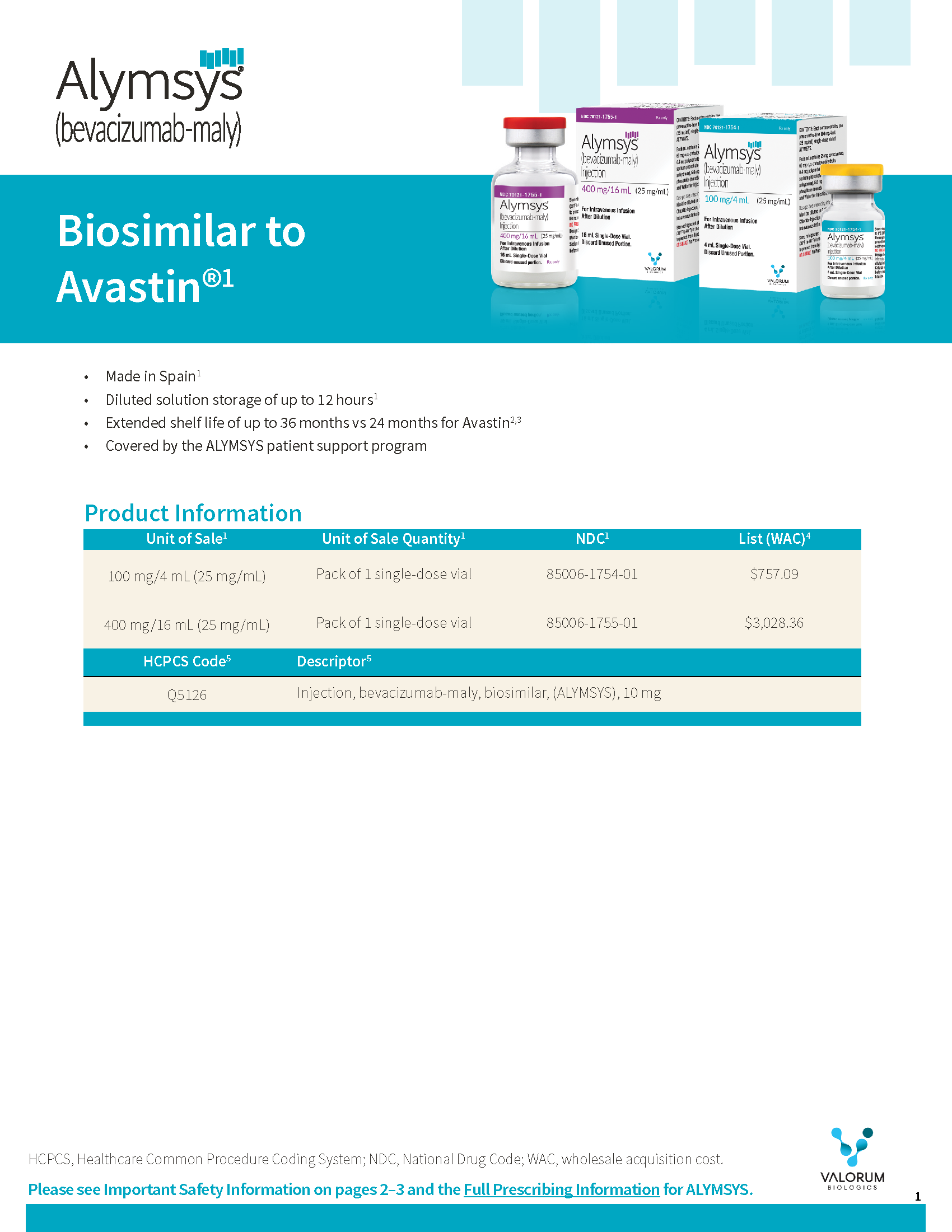
ALYMSYS Product Information Sheet
Download NowALYMSYS Important Safety Information
Indications and Usage:
ALYMSYS is a vascular endothelial growth factor indicated for the treatment of:
- Metastatic colorectal cancer, in combination with intravenous fluorouracil-based chemotherapy for first- or second-line treatment.
- Metastatic colorectal cancer, in combination with fluoropyrimidine-irinotecan- or fluoropyrimidine-oxaliplatin-based chemotherapy for second-line treatment in patients who have progressed on a first-line bevacizumab product-containing regimen.
Limitations of Use: ALYMSYS is not indicated for adjuvant treatment of colon cancer.
- Unresectable, locally advanced, recurrent or metastatic non-squamous non-small cell lung cancer, in combination with carboplatin and paclitaxel for first-line treatment.
- Recurrent glioblastoma in adults.
- Metastatic renal cell carcinoma in combination with interferon alfa.
- Persistent, recurrent, or metastatic cervical cancer, in combination with paclitaxel and cisplatin, or paclitaxel and topotecan.
- Epithelial ovarian, fallopian tube, or primary peritoneal cancer in combination with paclitaxel, pegylated liposomal doxorubicin, or topotecan for platinum-resistant recurrent disease who received no more than 2 prior chemotherapy regimens.
Warnings and Precautions:
Gastrointestinal Perforations and Fistula: Serious and sometimes fatal gastrointestinal perforation occurred at a higher incidence in patients receiving bevacizumab products compared to patients receiving chemotherapy. The incidence ranged from 0.3% to 3% across clinical studies, with the highest incidence in patients with a history of prior pelvic radiation. Serious fistulae (including tracheoesophageal, bronchopleural, biliary, vaginal, renal and bladder sites) ranged from <1% to 1.8% and was highest in patients with cervical cancer. Avoid ALYMSYS in patients with ovarian cancer who have evidence of recto-sigmoid involvement by pelvic examination or bowel involvement on CT scan or clinical symptoms of bowel obstruction. Discontinue in patients with gastrointestinal perforations, tracheoesophageal fistula, grade 4 fistula, or fistula formation involving any internal organ.
Surgery and Wound Healing Complications: The incidence of wound healing and surgical complications, including serious and fatal complications, is increased in bevacizumab-treated patients. In patients who experience wound healing complications during ALYMSYS treatment, withhold ALYMSYS until adequate wound healing. Withhold for at least 28 days prior to elective surgery. Do not administer for at least 28 days following major surgery and until adequate wound healing. The safety of resumption of bevacizumab products after resolution of wound healing complications has not been established. Necrotizing fasciitis including fatal cases have been reported in patients receiving bevacizumab. Discontinue ALYMSYS in patients who develop necrotizing fasciitis.
Hemorrhage: Severe or fatal hemorrhage, including hemoptysis, gastrointestinal bleeding, hematemesis, CNS hemorrhage, epistaxis, and vaginal bleeding, occurred up to 5-fold more frequently in patients receiving bevacizumab compared to patients receiving chemotherapy alone. Across clinical studies, the incidence of Grades 3 to 5 hemorrhagic events ranged from 0.4% to 7% in patients receiving bevacizumab. Do not administer ALYMSYS to patients with recent history of hemoptysis of 1/2 teaspoon or more of red blood. Discontinue in patients who develop a Grades 3 to 4 hemorrhage.
Arterial Thromboembolic Events (ATE): Serious, sometimes fatal, arterial thromboembolic events (ATE) including cerebral infarction, transient ischemic attacks, myocardial infarction, and angina, occurred at a higher incidence in patients receiving bevacizumab compared to patients receiving chemotherapy. Discontinue in patients who develop a severe ATE. The safety of reinitiating bevacizumab products after an ATE is resolved is not known.
Venous Thromboembolic Events (VTE): An increased risk of VTE events was observed across clinical studies. Discontinue ALYMSYS in patients with a Grade 4 VTE, including pulmonary embolism.
Hypertension: Severe hypertension occurred at a higher incidence in patients receiving bevacizumab products as compared to patients receiving chemotherapy alone. Monitor blood pressure every two to three weeks during treatment with ALYMSYS. Treat with appropriate anti-hypertensive therapy and monitor blood pressure regularly. Discontinue in patients who develop hypertensive crisis or hypertensive encephalopathy.
Posterior Reversible Encephalopathy Syndrome (PRES): PRES was reported in <0.5% of patients across clinical studies. Discontinue ALYMSYS in patients who develop PRES. Symptoms usually resolve or improve within days after discontinuing bevacizumab products, although some patients have experienced ongoing neurologic sequelae. The safety of reinitiating bevacizumab products in patients who developed PRES is not known.
Renal Injury and Proteinuria: The incidence and severity of proteinuria was higher in patients receiving bevacizumab as compared to patients receiving chemotherapy. Nephrotic syndrome occurred in <1% of patients receiving bevacizumab across clinical studies, in some instances with fatal outcome. Monitor proteinuria by dipstick urine analysis for the development or worsening of proteinuria with serial urinalyses during ALYMSYS therapy. Patients with a 2+ or greater urine dipstick reading should undergo further assessment with a 24-hour urine collection. Withhold for proteinuria greater than or equal to 2 grams per 24 hours and resume when less than 2 grams per 24 hours. Discontinue in patients who develop nephrotic syndrome.
Infusion-Related Reactions: In clinical studies, infusion-related reactions with the first dose occurred in <3% of patients and severe reactions occurred in 0.4% of patients. Decrease the rate of infusion for mild, clinically insignificant infusion-related reactions. Interrupt the infusion in patients with clinically significant infusion-related reactions and consider resuming at a slower rate following resolution. Discontinue in patients who develop a severe infusion-related reaction and administer appropriate medical therapy. Use of ALYMSYS can cause infusion-related reactions (IRR), inducing hypertension, hypertensive crises associated with neurologic signs and symptoms, wheezing, oxygen, desaturation, Grade 3 hypersensitivity, chest pain, headaches, rigors, and diaphoresis.
Embryo-Fetal Toxicity: Bevacizumab products may cause fetal harm when administered to pregnant women. Advise pregnant women of the potential risk to a fetus. Advise females of reproductive potential to use effective contraception during treatment with ALYMSYS and for 6 months after the last dose.
Ovarian Failure: The incidence of ovarian failure was 34% vs. 2% in premenopausal women receiving bevacizumab with chemotherapy as compared to those receiving chemotherapy alone for adjuvant treatment of a solid tumor. Bevacizumab products increase the risk of ovarian failure and may impair fertility in females. Inform females of reproductive potential of the risk of ovarian failure prior to initiating ALYMSYS.
Lactation: Because of the potential for serious adverse reactions in breastfed infants from bevacizumab products, advise women not to breastfeed during treatment with ALYMSYS and for 6 months after the last dose.
Congestive Heart Failure: ALYMSYS is not indicated for use with anthracycline-based chemotherapy. Among patients who received prior anthracycline treatment, the rate of CHF was 4% for patients receiving bevacizumab with chemotherapy as compared to 0.6% for patients receiving chemotherapy alone. Discontinue ALYMSYS in patients who develop CHF.
Most Common Adverse Reactions (> 10% chance of occurring):
- The most common adverse reactions in patients receiving bevacizumab products as a single agent or in combination with other anti-cancer therapies were epistaxis, headache, hypertension, rhinitis, proteinuria, taste alteration, dry skin, hemorrhage, lacrimation disorder, back pain and exfoliative dermatitis.
- Across all studies, bevacizumab was discontinued in 8% to 22% of patients because of adverse reactions.
- These are not all the possible side effects of ALYMSYS.
Indication-Specific Adverse Reactions:
Metastatic colorectal cancer
- In combination with intravenous fluorouracil-based chemotherapy for first or second line treatment (Study AVF2107): Grades 3-4 adverse reactions occurring at higher incidence (≥2%) in patients receiving bevacizumab with IFL (N=392) vs placebo with IFL (N=396) were leukopenia (37% vs 31%), neutropenia (21% vs 14%), diarrhea (34% vs 25%), abdominal pain (8% vs 5%), constipation (4% vs 2%), hypertension (12% vs 2%), deep vein thrombosis (9% vs 5%), intra-abdominal thrombosis (3% vs 1%), syncope (3% vs 1%), asthenia (10% vs 7%), and pain (8% vs 5%).
- In combination with fluoropyrimidine-irinotecan- or fluoropyrimidine-oxaliplatin-based chemotherapy for second-line treatment in patients who have progressed on a first-line bevacizumab product-containing regimen (Study E3200): Selected Grades 3–5 (non-hematologic) and Grades 4–5 (hematologic) occurring at a higher incidence (≥ 2%) in patients receiving bevacizumab with FOLFOX4 compared to FOLFOX4 alone were fatigue (19% vs. 13%), diarrhea (18% vs. 13%), sensory neuropathy (17% vs. 9%), nausea (12% vs. 5%), vomiting (11% vs. 4%), dehydration (10% vs. 5%), hypertension (9% vs. 2%), abdominal pain (8% vs. 5%), hemorrhage (5% vs. 1%), other neurological (5% vs. 3%), ileus (4% vs. 1%) and headache (3% vs. 0%).
First-Line Non-Squamous Non-Small Cell Lung Cancer:
- Study E4599: Grades 3–5 (non-hematologic) and Grade 4–5 (hematologic) adverse reactions in a clinical study occurred at ≥ 2% higher incidence in patients receiving bevacizumab with paclitaxel and carboplatin compared with patients receiving chemotherapy alone were neutropenia (27% vs. 17%), fatigue (16% vs. 13%), hypertension (8% vs. 0.7%), infection without neutropenia (7% vs. 3%), venous thromboembolism (5% vs. 3%), febrile neutropenia (5% vs. 2%), pneumonitis/pulmonary infiltrates (5% vs. 3%), infection with Grade 3 or 4 neutropenia (4% vs. 2%), hyponatremia (4% vs. 1%), headache (3% vs. 1%) and proteinuria (3% vs. 0%).
Recurrent Glioblastoma:
- Study EORTC 26101: In patients with recurrent glioblastoma (GBM) following radiotherapy and temozolomide, patients received bevacizumab with lomustine or lomustine alone, 22% of patients discontinued treatment in the bevacizumab with the lomustine arm compared with 10% of patients in the lomustine arm. In patients receiving bevacizumab with lomustine, the adverse reaction profile was similar to that observed in other approved indications.
Metastatic Renal Cell Carcinoma:
- Study BO17705: Grades 3-5 adverse reactions occurring at a >2% higher incidence in bevacizumab with interferon alfa compared to placebo with interferon alfa, were fatigue (13% vs. 8%), asthenia (10% vs. 7%), proteinuria (7% vs. 0%), hypertension (6% vs. 1%; including hypertension and hypertensive crisis), and hemorrhage (3% vs. 0.3%; including epistaxis, small intestinal hemorrhage, aneurysm ruptured, gastric ulcer hemorrhage, gingival bleeding, hemoptysis, hemorrhage intracranial, large intestinal hemorrhage, respiratory tract hemorrhage, and traumatic hematoma).
Persistent, Recurrent, or Metastatic Cervical Cancer:
- Study GOG-0240: Grades 3 or 4 adverse reactions occurred at a higher incidence of ≥ 2% in patients receiving bevacizumab with chemotherapy compared to patients receiving chemotherapy alone, were abdominal pain (12% vs. 10%), hypertension (11% vs. 0.5%), thrombosis (8% vs. 3%), diarrhea (6% vs. 3%), anal fistula (4% vs. 0%), proctalgia (3% vs. 0%), urinary tract infection (8% vs. 6%), cellulitis (3% vs. 0.5%), fatigue (14% vs. 10%), hypokalemia (7% vs. 4%), hyponatremia (4% vs. 1%), dehydration (4% vs. 0.5%), neutropenia (8% vs. 4%), lymphopenia (6% vs. 3%), back pain (6% vs. 3%), and pelvic pain (6% vs. 1%).
Epithelial Ovarian, Fallopian Tube or Primary Peritoneal Cancer:
- Study MO22224: Grades 3 - 4 adverse reactions occurring at a higher incidence (≥ 2%) in patients receiving bevacizumab with chemotherapy compared to patients receiving chemotherapy alone were hypertension (6.7% vs. 1.1%) and palmar-plantar erythrodysaesthesia syndrome (4.5% vs. 1.7%).
To report SUSPECTED ADVERSE REACTIONS, contact Valorum Biologics, LLC at 1-844-576-2709 or the FDA at 1-800-FDA-1088 or www.fda.gov/medwatch.
Please see Full Prescribing Information for ALYMSYS.
IMPORTANT SAFETY INFORMATION
ALYMSYS Important Safety Information
Indications and Usage:
ALYMSYS is a vascular endothelial growth factor indicated for the treatment of:
- Metastatic colorectal cancer, in combination with intravenous fluorouracil-based chemotherapy for first- or second-line treatment.
- Metastatic colorectal cancer, in combination with fluoropyrimidine-irinotecan- or fluoropyrimidine-oxaliplatin-based chemotherapy for second-line treatment in patients who have progressed on a first-line bevacizumab product-containing regimen.
Limitations of Use: ALYMSYS is not indicated for adjuvant treatment of colon cancer.
- Unresectable, locally advanced, recurrent or metastatic non-squamous non-small cell lung cancer, in combination with carboplatin and paclitaxel for first-line treatment.
- Recurrent glioblastoma in adults.
- Metastatic renal cell carcinoma in combination with interferon alfa.
- Persistent, recurrent, or metastatic cervical cancer, in combination with paclitaxel and cisplatin, or paclitaxel and topotecan.
- Epithelial ovarian, fallopian tube, or primary peritoneal cancer in combination with paclitaxel, pegylated liposomal doxorubicin, or topotecan for platinum-resistant recurrent disease who received no more than 2 prior chemotherapy regimens.
Warnings and Precautions:
Gastrointestinal Perforations and Fistula: Serious and sometimes fatal gastrointestinal perforation occurred at a higher incidence in patients receiving bevacizumab products compared to patients receiving chemotherapy. The incidence ranged from 0.3% to 3% across clinical studies, with the highest incidence in patients with a history of prior pelvic radiation. Serious fistulae (including tracheoesophageal, bronchopleural, biliary, vaginal, renal and bladder sites) ranged from <1% to 1.8% and was highest in patients with cervical cancer. Avoid ALYMSYS in patients with ovarian cancer who have evidence of recto-sigmoid involvement by pelvic examination or bowel involvement on CT scan or clinical symptoms of bowel obstruction. Discontinue in patients with gastrointestinal perforations, tracheoesophageal fistula, grade 4 fistula, or fistula formation involving any internal organ.
Surgery and Wound Healing Complications: The incidence of wound healing and surgical complications, including serious and fatal complications, is increased in bevacizumab-treated patients. In patients who experience wound healing complications during ALYMSYS treatment, withhold ALYMSYS until adequate wound healing. Withhold for at least 28 days prior to elective surgery. Do not administer for at least 28 days following major surgery and until adequate wound healing. The safety of resumption of bevacizumab products after resolution of wound healing complications has not been established. Necrotizing fasciitis including fatal cases have been reported in patients receiving bevacizumab. Discontinue ALYMSYS in patients who develop necrotizing fasciitis.
Hemorrhage: Severe or fatal hemorrhage, including hemoptysis, gastrointestinal bleeding, hematemesis, CNS hemorrhage, epistaxis, and vaginal bleeding, occurred up to 5-fold more frequently in patients receiving bevacizumab compared to patients receiving chemotherapy alone. Across clinical studies, the incidence of Grades 3 to 5 hemorrhagic events ranged from 0.4% to 7% in patients receiving bevacizumab. Do not administer ALYMSYS to patients with recent history of hemoptysis of 1/2 teaspoon or more of red blood. Discontinue in patients who develop a Grades 3 to 4 hemorrhage.
Arterial Thromboembolic Events (ATE): Serious, sometimes fatal, arterial thromboembolic events (ATE) including cerebral infarction, transient ischemic attacks, myocardial infarction, and angina, occurred at a higher incidence in patients receiving bevacizumab compared to patients receiving chemotherapy. Discontinue in patients who develop a severe ATE. The safety of reinitiating bevacizumab products after an ATE is resolved is not known.
Venous Thromboembolic Events (VTE): An increased risk of VTE events was observed across clinical studies. Discontinue ALYMSYS in patients with a Grade 4 VTE, including pulmonary embolism.
Hypertension: Severe hypertension occurred at a higher incidence in patients receiving bevacizumab products as compared to patients receiving chemotherapy alone. Monitor blood pressure every two to three weeks during treatment with ALYMSYS. Treat with appropriate anti-hypertensive therapy and monitor blood pressure regularly. Discontinue in patients who develop hypertensive crisis or hypertensive encephalopathy.
Posterior Reversible Encephalopathy Syndrome (PRES): PRES was reported in <0.5% of patients across clinical studies. Discontinue ALYMSYS in patients who develop PRES. Symptoms usually resolve or improve within days after discontinuing bevacizumab products, although some patients have experienced ongoing neurologic sequelae. The safety of reinitiating bevacizumab products in patients who developed PRES is not known.
Renal Injury and Proteinuria: The incidence and severity of proteinuria was higher in patients receiving bevacizumab as compared to patients receiving chemotherapy. Nephrotic syndrome occurred in <1% of patients receiving bevacizumab across clinical studies, in some instances with fatal outcome. Monitor proteinuria by dipstick urine analysis for the development or worsening of proteinuria with serial urinalyses during ALYMSYS therapy. Patients with a 2+ or greater urine dipstick reading should undergo further assessment with a 24-hour urine collection. Withhold for proteinuria greater than or equal to 2 grams per 24 hours and resume when less than 2 grams per 24 hours. Discontinue in patients who develop nephrotic syndrome.
Infusion-Related Reactions: In clinical studies, infusion-related reactions with the first dose occurred in <3% of patients and severe reactions occurred in 0.4% of patients. Decrease the rate of infusion for mild, clinically insignificant infusion-related reactions. Interrupt the infusion in patients with clinically significant infusion-related reactions and consider resuming at a slower rate following resolution. Discontinue in patients who develop a severe infusion-related reaction and administer appropriate medical therapy. Use of ALYMSYS can cause infusion-related reactions (IRR), inducing hypertension, hypertensive crises associated with neurologic signs and symptoms, wheezing, oxygen, desaturation, Grade 3 hypersensitivity, chest pain, headaches, rigors, and diaphoresis.
Embryo-Fetal Toxicity: Bevacizumab products may cause fetal harm when administered to pregnant women. Advise pregnant women of the potential risk to a fetus. Advise females of reproductive potential to use effective contraception during treatment with ALYMSYS and for 6 months after the last dose.
Ovarian Failure: The incidence of ovarian failure was 34% vs. 2% in premenopausal women receiving bevacizumab with chemotherapy as compared to those receiving chemotherapy alone for adjuvant treatment of a solid tumor. Bevacizumab products increase the risk of ovarian failure and may impair fertility in females. Inform females of reproductive potential of the risk of ovarian failure prior to initiating ALYMSYS.
Lactation: Because of the potential for serious adverse reactions in breastfed infants from bevacizumab products, advise women not to breastfeed during treatment with ALYMSYS and for 6 months after the last dose.
Congestive Heart Failure: ALYMSYS is not indicated for use with anthracycline-based chemotherapy. Among patients who received prior anthracycline treatment, the rate of CHF was 4% for patients receiving bevacizumab with chemotherapy as compared to 0.6% for patients receiving chemotherapy alone. Discontinue ALYMSYS in patients who develop CHF.
Most Common Adverse Reactions (> 10% chance of occurring):
- The most common adverse reactions in patients receiving bevacizumab products as a single agent or in combination with other anti-cancer therapies were epistaxis, headache, hypertension, rhinitis, proteinuria, taste alteration, dry skin, hemorrhage, lacrimation disorder, back pain and exfoliative dermatitis.
- Across all studies, bevacizumab was discontinued in 8% to 22% of patients because of adverse reactions.
- These are not all the possible side effects of ALYMSYS.
Indication-Specific Adverse Reactions:
Metastatic colorectal cancer
- In combination with intravenous fluorouracil-based chemotherapy for first or second line treatment (Study AVF2107): Grades 3-4 adverse reactions occurring at higher incidence (≥2%) in patients receiving bevacizumab with IFL (N=392) vs placebo with IFL (N=396) were leukopenia (37% vs 31%), neutropenia (21% vs 14%), diarrhea (34% vs 25%), abdominal pain (8% vs 5%), constipation (4% vs 2%), hypertension (12% vs 2%), deep vein thrombosis (9% vs 5%), intra-abdominal thrombosis (3% vs 1%), syncope (3% vs 1%), asthenia (10% vs 7%), and pain (8% vs 5%).
- In combination with fluoropyrimidine-irinotecan- or fluoropyrimidine-oxaliplatin-based chemotherapy for second-line treatment in patients who have progressed on a first-line bevacizumab product-containing regimen (Study E3200): Selected Grades 3–5 (non-hematologic) and Grades 4–5 (hematologic) occurring at a higher incidence (≥ 2%) in patients receiving bevacizumab with FOLFOX4 compared to FOLFOX4 alone were fatigue (19% vs. 13%), diarrhea (18% vs. 13%), sensory neuropathy (17% vs. 9%), nausea (12% vs. 5%), vomiting (11% vs. 4%), dehydration (10% vs. 5%), hypertension (9% vs. 2%), abdominal pain (8% vs. 5%), hemorrhage (5% vs. 1%), other neurological (5% vs. 3%), ileus (4% vs. 1%) and headache (3% vs. 0%).
First-Line Non-Squamous Non-Small Cell Lung Cancer:
- Study E4599: Grades 3–5 (non-hematologic) and Grade 4–5 (hematologic) adverse reactions in a clinical study occurred at ≥ 2% higher incidence in patients receiving bevacizumab with paclitaxel and carboplatin compared with patients receiving chemotherapy alone were neutropenia (27% vs. 17%), fatigue (16% vs. 13%), hypertension (8% vs. 0.7%), infection without neutropenia (7% vs. 3%), venous thromboembolism (5% vs. 3%), febrile neutropenia (5% vs. 2%), pneumonitis/pulmonary infiltrates (5% vs. 3%), infection with Grade 3 or 4 neutropenia (4% vs. 2%), hyponatremia (4% vs. 1%), headache (3% vs. 1%) and proteinuria (3% vs. 0%).
Recurrent Glioblastoma:
- Study EORTC 26101: In patients with recurrent glioblastoma (GBM) following radiotherapy and temozolomide, patients received bevacizumab with lomustine or lomustine alone, 22% of patients discontinued treatment in the bevacizumab with the lomustine arm compared with 10% of patients in the lomustine arm. In patients receiving bevacizumab with lomustine, the adverse reaction profile was similar to that observed in other approved indications.
Metastatic Renal Cell Carcinoma:
- Study BO17705: Grades 3-5 adverse reactions occurring at a >2% higher incidence in bevacizumab with interferon alfa compared to placebo with interferon alfa, were fatigue (13% vs. 8%), asthenia (10% vs. 7%), proteinuria (7% vs. 0%), hypertension (6% vs. 1%; including hypertension and hypertensive crisis), and hemorrhage (3% vs. 0.3%; including epistaxis, small intestinal hemorrhage, aneurysm ruptured, gastric ulcer hemorrhage, gingival bleeding, hemoptysis, hemorrhage intracranial, large intestinal hemorrhage, respiratory tract hemorrhage, and traumatic hematoma).
Persistent, Recurrent, or Metastatic Cervical Cancer:
- Study GOG-0240: Grades 3 or 4 adverse reactions occurred at a higher incidence of ≥ 2% in patients receiving bevacizumab with chemotherapy compared to patients receiving chemotherapy alone, were abdominal pain (12% vs. 10%), hypertension (11% vs. 0.5%), thrombosis (8% vs. 3%), diarrhea (6% vs. 3%), anal fistula (4% vs. 0%), proctalgia (3% vs. 0%), urinary tract infection (8% vs. 6%), cellulitis (3% vs. 0.5%), fatigue (14% vs. 10%), hypokalemia (7% vs. 4%), hyponatremia (4% vs. 1%), dehydration (4% vs. 0.5%), neutropenia (8% vs. 4%), lymphopenia (6% vs. 3%), back pain (6% vs. 3%), and pelvic pain (6% vs. 1%).
Epithelial Ovarian, Fallopian Tube or Primary Peritoneal Cancer:
- Study MO22224: Grades 3 - 4 adverse reactions occurring at a higher incidence (≥ 2%) in patients receiving bevacizumab with chemotherapy compared to patients receiving chemotherapy alone were hypertension (6.7% vs. 1.1%) and palmar-plantar erythrodysaesthesia syndrome (4.5% vs. 1.7%).
To report SUSPECTED ADVERSE REACTIONS, contact Valorum Biologics, LLC at 1-844-576-2709 or the FDA at 1-800-FDA-1088 or www.fda.gov/medwatch.
Please see Full Prescribing Information for ALYMSYS.